At 18, Christian Eriksen was the youngest player at the 2010 World Cup. Eleven years later, his career stopped during a European Championship match in Copenhagen, when he suffered a cardiac arrest. His return with Brentford would become another defining chapter, but there was already a substantial football story behind it: three Dutch titles, Tottenham’s run to a Champions League final and a Serie A championship with Inter.
The thread through those chapters is his ability to see a pass before the space has fully opened. From his early days in Denmark to spells in England, Italy and Germany, Eriksen has made a career out of giving teammates that extra moment.
From Middelfart to Amsterdam
Born on February 14, 1992, Christian Dannemann Eriksen began playing football at Middelfart G&BK in his Danish hometown. His father, Thomas, helped coach him there. Football was a family interest rather than simply his own pursuit: his younger sister, Louise, also became a senior player in Denmark.
In 2005, he moved to Odense Boldklub, better known as OB. Three years later, Ajax brought him to Amsterdam.
It was a fitting destination for a midfielder whose strengths were technical rather than physical. Ajax expected young players to receive the ball under pressure, understand the movement around them and make decisions quickly. Eriksen had the touch and awareness to progress through that environment.
His first-team debut came against NAC Breda on January 17, 2010. Within months, he had won the Dutch Cup and made his senior international debut. Before the season was over, he was heading to South Africa with Denmark.
Ajax: learning how to run a game
The World Cup offered an early glimpse of international football, but Amsterdam was where Eriksen learned the weekly demands of senior competition.
Under Frank de Boer, he became an increasingly important part of a side that won three consecutive Eredivisie titles, from 2010-11 through 2012-13. He could play behind the forwards or drop deeper to help move possession through midfield, making him more than a specialist final-ball player.
His goals mattered, too. Across 113 league appearances for Ajax, he scored 25 times. By the time Tottenham signed him in August 2013 for a reported £11 million, he had already experienced title races, European matches and the expectation of controlling games.
He arrived in England as a 21-year-old with considerable experience, but still room to develop.
Tottenham: the creative link in a rising team
Eriksen’s first Premier League appearance, against Norwich City in September 2013, brought an assist for Gylfi Sigurdsson. It was an apt introduction.
Over the following seasons, he became a central part of Tottenham’s attacking structure, particularly under Mauricio Pochettino. Harry Kane’s finishing and Son Heung-min’s runs drew attention, but the midfielder frequently supplied the pass that connected everything.
He was not a luxury player waiting for possession. Pochettino’s football demanded running and pressing, and Eriksen combined that work with crosses, disguised passes and shots from distance. His set pieces offered another route to goal.
Twice named Tottenham’s Player of the Year, he also earned a place in the PFA Premier League Team of the Year for 2017-18.
The most dramatic season came next. Spurs reached the 2019 Champions League final after surviving a quarter-final against Manchester City and overturning a three-goal aggregate deficit against Ajax in Amsterdam. Eriksen was on the pitch against his former club as Lucas Moura completed his late hat-trick.
Liverpool won the final 2-0, leaving that Tottenham side without the trophy its European run had promised. By the time Eriksen departed in January 2020, he had made 226 Premier League appearances for Spurs and scored 51 goals.
Inter: a title, then an abrupt stop
Inter signed him for a reported fee of around £17 million. The transition was not straightforward.
Antonio Conte’s system required adjustments, and Eriksen initially struggled to secure a regular role. Gradually, he found a place. A stoppage-time free kick against AC Milan in the Coppa Italia in January 2021 was a conspicuous contribution, and he became more involved during the second half of the season.
Inter won the 2020-21 Serie A title, ending Juventus’s nine-year run as champions. Eriksen finished his Italian spell with 43 league appearances and four goals.
Then came June 12, 2021.
During Denmark’s opening Euro 2020 match against Finland, he collapsed on the pitch and suffered a cardiac arrest. Medical staff performed CPR and used a defibrillator before he was taken to hospital.
He was subsequently fitted with an implantable cardioverter-defibrillator, or ICD. Italian sporting medical regulations prevented him from playing for Inter with the device, and his contract was terminated by mutual agreement in December 2021.
Brentford: back on the pitch
Brentford offered a route back, signing Eriksen on a short-term contract in January 2022. The club had a strong Danish connection, including head coach Thomas Frank, who had worked with him at youth international level.
His competitive return came against Newcastle United on February 26, less than nine months after his collapse.
Once back in the side, he quickly became important to Brentford’s midfield. His passing helped the team retain possession and release runners earlier. He made 11 league appearances, scoring once, as the club secured another season in the Premier League.
His international return carried its own striking detail. Introduced against the Netherlands in March 2022, he scored with his first touch.
Manchester United and the move to Wolfsburg
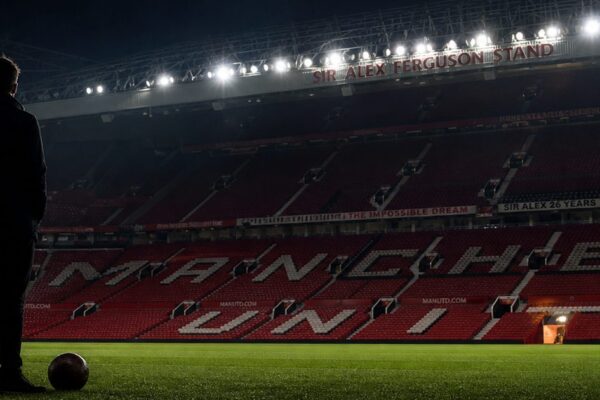
Manchester United signed Eriksen on a free transfer in July 2022. Erik ten Hag often used him deeper than he had played at Tottenham, asking him to help build attacks alongside Casemiro while Bruno Fernandes operated further forward.
An ankle injury interrupted his first season, but he still contributed to a campaign that brought Champions League qualification and the League Cup.
Another medal followed when United beat Manchester City in the 2024 FA Cup final. His role became less consistent over time, with injuries and competition affecting his minutes, but he remained capable of changing the rhythm of a match with his distribution.
He left United in 2025 after three seasons, having made 73 Premier League appearances and scored three goals.
On September 10, 2025, Wolfsburg announced his arrival on a two-year contract. The move added the Bundesliga to a club career already spanning the Netherlands, England and Italy.
Denmark: from teenage debutant to record appearance-maker
Eriksen made his senior Denmark debut against Austria in March 2010. That summer’s World Cup was the first of several major tournaments, rather than an isolated teenage opportunity.
One of his strongest international performances came in Dublin on November 14, 2017. With a place at the following World Cup at stake, he scored a hat-trick as Denmark beat the Republic of Ireland 5-1 in the second leg of their playoff.
He subsequently appeared at the 2018 and 2022 World Cups, as well as Euro 2020 and Euro 2024: five major tournaments in total.
At Euro 2024, he became Denmark’s most-capped men’s player. He also scored against Slovenia in the opening group match, three years after his cardiac arrest at the previous European Championship.
His individual recognition includes five Danish Football Player of the Year awards. More telling than any single award, though, has been the length of time Denmark have relied on him to organise their attacking play.
How Eriksen plays
Eriksen’s game starts before the ball arrives. He checks his surroundings, adjusts his position and tries to receive at an angle that leaves more than one pass available.
Predominantly right-footed but comfortable using his left, he can deliver from wide areas, thread passes through central gaps or switch play when one side becomes crowded. His shooting discourages defenders from simply backing away.
The deeper role seen at Manchester United placed greater emphasis on circulation and control. It was a change of position, not a complete reinvention: the same awareness that helped him create chances near the penalty area could help a team escape pressure further back.
Family and life away from football
Eriksen and his long-term partner, Sabrina Kvist Jensen, have a son and a daughter. Beyond those publicly shared details, they have generally kept family life away from the spotlight.
There are occasional lighter glimpses. When discussing his Manchester United shirt number in a club interview, Eriksen said his son had helped choose No. 14.
Football also remained a connection with home through his sister Louise’s playing career. His own route took him through several countries, but the family link to the sport began long before Ajax scouts noticed him.
After his cardiac arrest, Eriksen spoke publicly about wanting to play again. The practical result was not simply a return for one ceremonial appearance: it was regular club football, another World Cup and another European Championship.
FAQ
What nationality is Christian Eriksen?
He is Danish, born in Middelfart on February 14, 1992.
Which club did he join after Manchester United?
He joined VfL Wolfsburg on September 10, 2025, signing a two-year contract.
What happened to him at Euro 2020?
He suffered a cardiac arrest against Finland on June 12, 2021. He received emergency treatment on the pitch and was later fitted with an ICD.
Why did he leave Inter Milan?
Italian sporting medical regulations prevented him from playing with an ICD. Inter and Eriksen mutually terminated his contract in December 2021.
Which club brought him back to professional football?
Brentford signed him in January 2022. He returned to competitive action against Newcastle United on February 26.
What major trophies has he won?
His honours include three Eredivisie titles and a Dutch Cup with Ajax, Serie A with Inter, and the League Cup and FA Cup with Manchester United.
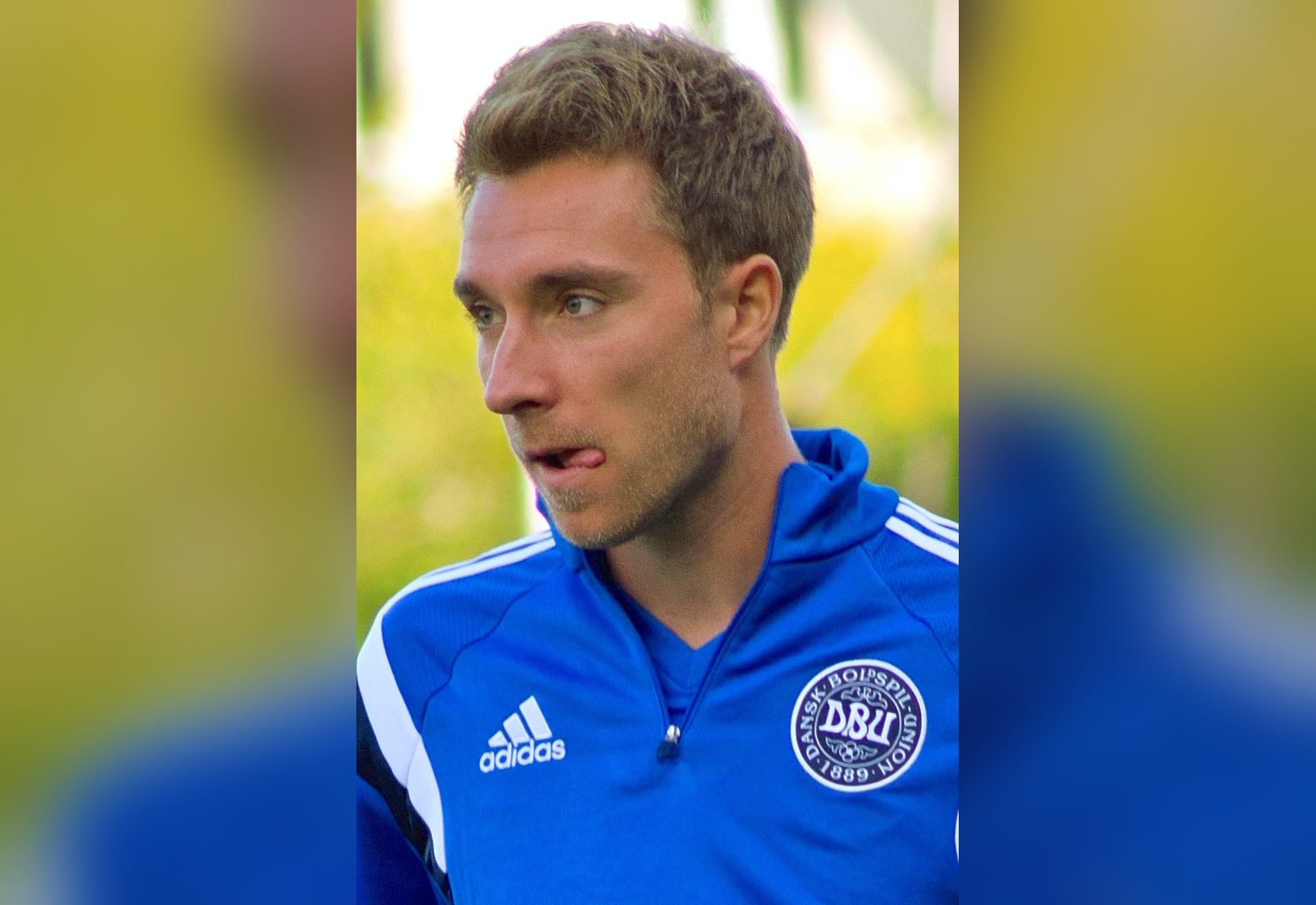
Photo: Chris 0023 from Lyngby, Denmark, CC BY-SA 2.0, via Wikimedia Commons