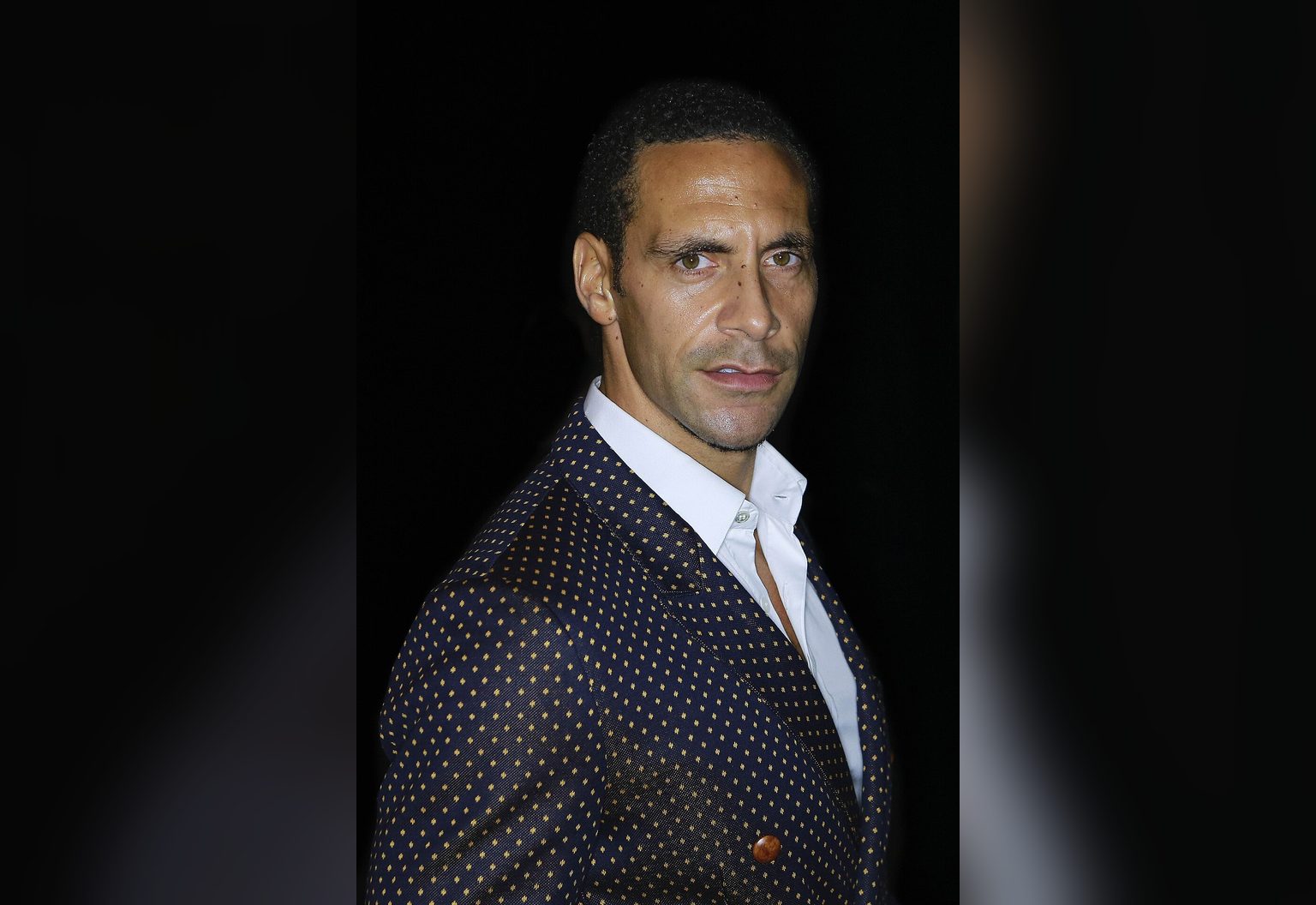
At 19, Rio Ferdinand was already West Ham’s player of the year. Four years later, Manchester United paid around £30 million for him, a British transfer record for a defender whose game was built as much on composure as confrontation.
Between those milestones came a move to Leeds United and a Champions League semi-final. The promise was clear early on. Turning it into six Premier League titles and a European Cup required a longer education, including an eight-month suspension that interrupted his rise at Old Trafford.
From Peckham to West Ham’s first team
Born in Camberwell, London, on November 7, 1978, Rio Gavin Ferdinand grew up in nearby Peckham. Professional football became something of a family trade: his younger brother Anton and cousins Les and Kane Ferdinand also reached the professional game.
His childhood interests were broader than football. He attended ballet classes, an unusual detail in a centre-back’s upbringing, though the balance and coordination would not look out of place in his later performances.
West Ham brought him into their youth system in 1992. He made his first-team debut on May 5, 1996, appearing as a substitute against Sheffield Wednesday on the final day of the Premier League season.
A loan at Bournemouth in the autumn of 1996 gave him 10 league appearances and a useful change of surroundings. Back at West Ham, manager Harry Redknapp increasingly trusted a teenager who was comfortable receiving the ball rather than simply clearing it.
By the end of 1997-98, he had won the Hammer of the Year award. England had already taken notice: his international debut came against Cameroon on November 15, 1997. At 19 years and eight days, he became the country’s youngest senior defender at the time.
He travelled to the 1998 World Cup without playing. At club level, however, he was becoming difficult to overlook, eventually making 127 Premier League appearances for West Ham and scoring twice.
Leeds pay for potential and get European nights
Leeds United paid £18 million for Ferdinand in November 2000. It was a British transfer record and made him the world’s most expensive defender.
David O’Leary’s team offered a different stage. Leeds were competing in the Champions League, and their new centre-back helped them reach the 2001 semi-finals, where Valencia ended their run.
There were difficult afternoons as well as European nights, but his influence grew. He became captain, won the Premier League Player of the Month award in October 2001 and earned a place in the 2001-02 PFA Team of the Year.
The spell was brief: 54 league appearances and two goals. Yet it changed his standing. He left Leeds not merely as an expensive young defender, but as an established international with experience deep into Europe’s leading club competition.
At the 2002 World Cup, he scored his first England goal in the 3-0 victory over Denmark. England reached the quarter-finals, losing to eventual champions Brazil. Manchester United completed his signing that July.
Old Trafford: an early title, then an enforced stop
The fee was widely reported at around £30 million, again setting British and world-defender transfer records. Sir Alex Ferguson was buying someone who could defend space behind a high line and begin attacks from the back.
The first return came quickly. United won the 2002-03 Premier League title, finishing five points ahead of Arsenal.
Then came the most damaging interruption of his playing career. Ferdinand missed a scheduled drugs test at United’s training ground in September 2003. The Football Association imposed an eight-month suspension, which began in January 2004 and also ruled him out of that summer’s European Championship.
The offence was failure to attend the test, not a positive result. It nevertheless cost him a substantial stretch of club and international football.
After returning in September 2004, he rebuilt his place in the side. Selection for the 2004-05 PFA Team of the Year reflected that recovery, although United were still searching for the combination that would restore their domestic dominance.
Ferdinand and Vidić become United’s defensive foundation
Nemanja Vidić arrived in January 2006. Their partnership became central to United’s next sustained run of success.
The contrast was useful without being absolute. Vidić attacked aerial challenges and relished close physical contests; Ferdinand brought recovery pace, anticipation and confidence carrying the ball. Both could cover for the other, and both were demanding organisers.
United reclaimed the league in 2006-07, then retained it in each of the next two seasons.
The defining European night came in Moscow in May 2008. Ferdinand captained United in the Champions League final against Chelsea, which finished 1-1 before a penalty shootout. Edwin van der Sar’s save from Nicolas Anelka settled it.
That season brought Ferdinand selection in the FIFPro World XI. United also won the FIFA Club World Cup later in 2008.
Further league titles followed in 2010-11 and 2012-13, bringing his total to six. His final championship came in Ferguson’s last season, with careful management increasingly important as injuries affected his availability.
Across 12 years at Old Trafford, he made 455 appearances in all competitions. Of those, 312 came in the Premier League, where he scored seven goals. He was selected for the PFA’s divisional team six times overall: once at Leeds and five times at United.
England’s missed tournaments and a final season at QPR
International football brought less silverware and several sharp disappointments.
Ferdinand played at the 2002 and 2006 World Cups, with England reaching the quarter-finals on both occasions. He was appointed captain ahead of the 2010 tournament but suffered a knee injury in training before it began and had to withdraw.
He never appeared at a European Championship. Suspension kept him out in 2004, and England failed to qualify in 2008.
His international retirement followed in May 2013. The final record was 81 caps and three goals.
After leaving United in 2014, he joined Queens Park Rangers, reuniting with Redknapp. It proved a difficult final chapter: 11 league appearances in a season that ended in relegation.
He announced his retirement on May 30, 2015. His Premier League total stood at 504 appearances and 11 goals. Induction into the competition’s Hall of Fame followed in 2023.
A defender who preferred to see trouble early
Ferdinand’s pace made recovery tackles possible, but his best work often happened before a tackle was necessary. He watched passing lanes, adjusted his position and tried to move danger away from goal.
At around 1.89 metres tall, he could compete in the air without relying on physical force alone. In possession, he was willing to step beyond the first pressing opponent or find a midfielder through a crowded area.
That confidence sometimes looked casual, particularly early in his career. At his best, though, it gave United control: winning the ball did not have to mean immediately surrendering it.
Family, bereavement and a public second career
Ferdinand married Rebecca Ellison in 2009. They had three children, Lorenz, Tate and Tia, before she died from breast cancer in May 2015.
He later spoke publicly about grief and the difficulty of parenting through it. The BBC documentary Rio Ferdinand: Being Mum and Dad, broadcast in 2017, followed that experience and won a BAFTA in 2018. Its focus was not footballing status but the practical, sometimes overwhelming business of keeping a family going after bereavement.
In September 2019, he married Kate Wright, now known as Kate Ferdinand. They have two children together, Cree and Shae. The couple have discussed blended-family life publicly, including in the documentary Rio and Kate: Becoming a Stepfamily.
Broadcasting became his most visible professional role after retirement, alongside his Rio Ferdinand Presents interviews and digital content. His business interests have included sports management, Football Escapes and investments in technology companies.
The Rio Ferdinand Foundation, established in 2012, supports young people through education, employment opportunities and community projects. He was appointed OBE in 2022 for services to football and charity.
FAQ
How many Premier League titles did Rio Ferdinand win?
Six, all with Manchester United: 2002-03, 2006-07, 2007-08, 2008-09, 2010-11 and 2012-13.
Which clubs did he play for?
West Ham United, Bournemouth on loan, Leeds United, Manchester United and Queens Park Rangers.
How many appearances did he make for England?
He earned 81 senior caps and scored three goals between 1997 and 2011.
Why was Ferdinand suspended?
He received an eight-month ban for missing a scheduled drugs test in September 2003. The suspension began in January 2004.
When did he retire?
He retired from international football in May 2013 and announced his retirement from playing on May 30, 2015.
Who is Rio Ferdinand married to?
He married Kate Ferdinand in 2019. His first wife, Rebecca Ellison, died in 2015.
Photo: Walterlan Papetti, CC BY-SA 4.0, via Wikimedia Commons