At Wembley in May 1978, Kenny Dalglish lifted the ball over the advancing Bruges goalkeeper and ran towards the Liverpool supporters. His goal settled the European Cup final, less than a year after he had arrived from Celtic for a British-record £440,000.
Replacing Kevin Keegan had been a considerable assignment. Within his first season, the Scottish forward had helped Liverpool retain the biggest trophy in European club football. Two more European Cups would follow, but goals and medals explain only part of his standing at Anfield.
Glasgow beginnings and an unexpected allegiance
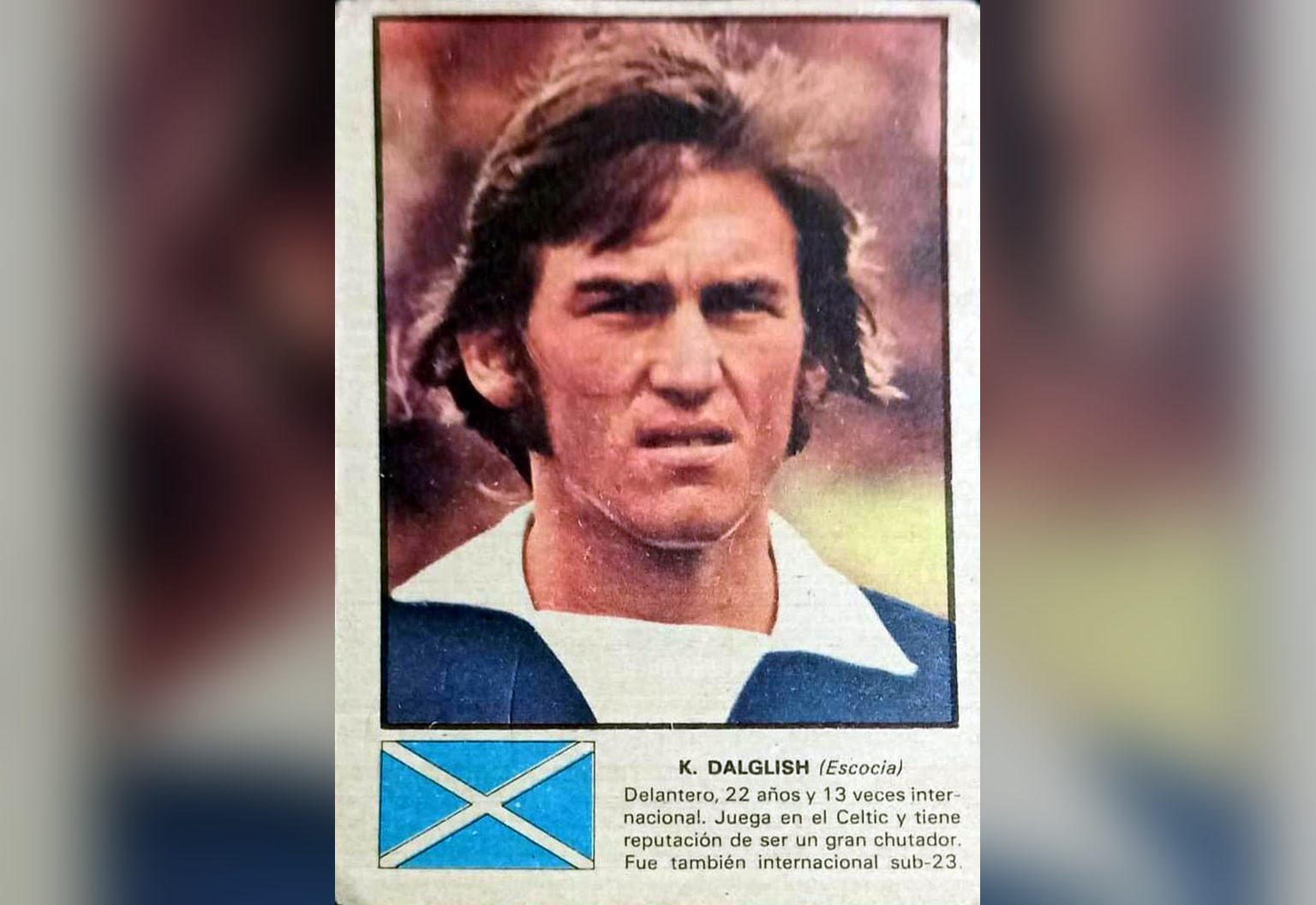
Kenneth Mathieson Dalglish was born in Glasgow on March 4, 1951, and grew up supporting Rangers. The boy who would become Celtic’s captain had Rangers posters on his bedroom wall before crossing Glasgow’s football divide.
After playing youth football with local sides, including Drumchapel Amateurs, he joined Celtic in 1967. A spell with Cumbernauld United helped him gain experience while he worked towards a place in Jock Stein’s team.
His senior Celtic debut came against Hamilton Academical in the League Cup on September 25, 1968. Breaking into a side that had won the European Cup the previous year required patience; becoming a regular took longer than making that first appearance.
On August 14, 1971, he scored his first competitive first-team goal, a penalty against Rangers in the League Cup. It was an unusually pointed way for a former Rangers supporter to begin his scoring career.
Celtic: learning to lead the attack
Once established, Dalglish became central to Celtic’s forward line. He could score, but just as importantly, he understood how to bring teammates into the game.
Across 204 Scottish league appearances, he scored 111 goals. Those league figures are distinct from his larger totals across all competitions, which can vary between historical records depending on the fixtures included.
His major domestic honours were clear enough: four league championships, four Scottish Cups and one Scottish League Cup. The league titles came in 1972, 1973, 1974 and 1977, with his final season bringing a league-and-cup double.
He also became club captain. By the time Liverpool approached, they were buying an experienced international who had already carried responsibility at a demanding club, not simply a promising goalscorer.
Leaving Celtic was still a substantial move. He had spent a decade developing there, from teenage recruit to the player around whom attacks were built.
Liverpool’s number seven makes his mark
Liverpool completed the £440,000 transfer on August 10, 1977. Dalglish inherited Keegan’s number seven shirt and joined a team already holding the English league title and European Cup.
He scored on his league debut against Middlesbrough and finished his first season with 31 goals in all competitions. The last of them, against Bruges at Wembley, was the most consequential.
Further European Cups followed against Real Madrid in 1981 and Roma in 1984. Domestically, Liverpool won six league championships during his playing career: 1979, 1980, 1982, 1983, 1984 and 1986. Four consecutive League Cups between 1981 and 1984 demonstrated the team’s appetite across competitions.
His partnership with Ian Rush became especially productive. Rush attacked space and supplied relentless movement; Dalglish could receive under pressure, protect possession and find the pass that released him. Defenders had to decide whether to follow the Scot away from goal or leave him room to turn.
The individual awards reflected that influence. He was the Football Writers’ Association Footballer of the Year in 1979 and 1983, and the PFA Players’ Player of the Year in 1983. He also finished second to Michel Platini in that year’s Ballon d’Or voting.
His Liverpool playing record eventually reached 172 goals in 515 competitive appearances, including 118 goals in 355 league matches.
Scotland: three World Cups and a record haul
Alongside his club career, Dalglish became Scotland’s most-capped men’s international. His debut came against Belgium on November 10, 1971; his final appearance followed against Luxembourg on November 12, 1986.
Between those dates, he collected 102 caps and scored 30 goals, sharing Scotland’s men’s scoring record with Denis Law.
One goal remains particularly familiar: the winner against England at Hampden in 1976, struck through Ray Clemence’s legs. The goalkeeper would become his Liverpool teammate the following year.
Dalglish played at the 1974, 1978 and 1982 World Cups. Scotland went out in the group stage each time, although their campaigns contained memorable performances. He scored in the 3-2 victory over the Netherlands in 1978 and against New Zealand four years later.
His 100th cap came against Romania on March 26, 1986. Injury then prevented him from appearing at a fourth World Cup that summer.
From player to Liverpool manager
In 1985, following Joe Fagan’s retirement and the Heysel stadium disaster, Liverpool appointed Dalglish player-manager. At 34, he was suddenly responsible for selecting and directing teammates while still contributing on the pitch.
His first season ended with the league and FA Cup double. Fittingly, he scored the goal at Chelsea that secured the championship, controlling a pass on his chest before finishing past Tony Godden. Liverpool then beat Everton 3-1 in the FA Cup final.
As his playing appearances diminished, his management became the main story. Further league titles arrived in 1988 and 1990, and another FA Cup in 1989.
The Hillsborough disaster in April 1989 changed the demands of the job beyond recognition. Dalglish and his wife, Marina, supported bereaved families, attended funerals and visited injured supporters. His presence during that period became fundamental to his relationship with Liverpool.
He resigned in February 1991, exhausted by the pressures surrounding the role. His final competitive playing appearance had come in May 1990.
Blackburn, Newcastle and the return to Anfield
Management did not end with that departure. Dalglish took charge of Blackburn Rovers in October 1991, won promotion to the top flight in 1992 and built a title-winning side around players including Alan Shearer and Chris Sutton.
Blackburn secured the Premier League championship in 1995, finishing one point ahead of Manchester United. It was a different kind of achievement from his Liverpool titles: taking a newly promoted club to the championship within three seasons.
He later managed Newcastle United, guiding them to second place in 1997 and the FA Cup final in 1998. A subsequent spell at Celtic included a period as interim manager and victory in the 2000 Scottish League Cup final.
His return as Liverpool manager in January 2011 carried considerable emotional weight. The second spell brought the League Cup in 2012 and an FA Cup final appearance, before he left that May.
He subsequently served Liverpool in ambassadorial and advisory capacities. In 2017, the club renamed its Centenary Stand the Kenny Dalglish Stand.
A forward who made others better
At around 1.73 metres tall, Dalglish did not depend on aerial dominance or long, open-field runs. His strengths were balance, awareness and the ability to keep the ball when a defender was tight behind him.
He could play as a striker or drop into the spaces behind one. Often, the decisive contribution was a turn, a pause or a short pass that changed the angle of an attack.
That explains why his reputation rests on more than his scoring totals. He made combinations work, particularly with Rush, without sacrificing his own threat near goal.
Family, charity and life away from football
Dalglish married Marina in November 1974. They have four children: Kelly, Paul, Lynsey and Lauren.
Two followed particularly visible routes into football. Paul became a professional player and later a coach, while Kelly Cates established herself as a football broadcaster. The family’s connection with the game extended beyond his own dressing rooms.
After Marina was diagnosed with breast cancer in 2003, the couple founded the Marina Dalglish Appeal in 2005. Its fundraising has supported cancer treatment and facilities on Merseyside, turning their experience into sustained practical work.
Dalglish received an MBE in 1985 and was knighted in 2018 for services to football, charity and Liverpool. The recognition encompassed both parts of his public life: what he achieved with a ball and what he did for people away from the pitch.
FAQ
Where was Kenny Dalglish born?
He was born in Glasgow, Scotland, on March 4, 1951.
How many goals did he score for Liverpool?
He scored 172 goals in 515 competitive appearances. His league record was 118 goals in 355 matches.
How many European Cups did he win?
He won three with Liverpool, in 1978, 1981 and 1984. He scored the only goal in the 1978 final against Bruges.
What are his Scotland records?
He earned 102 caps and scored 30 goals. He holds Scotland’s men’s appearance record and shares the scoring record with Denis Law.
Did he win the Ballon d’Or?
No. He finished second in 1983, behind Michel Platini.
Who is his wife?
His wife is Marina Dalglish. They married in 1974 and founded the Marina Dalglish Appeal in 2005.
Photo: Unknown author Unknown author, Public domain, via Wikimedia Commons