At 17, Paulo Dybala was already breaking records at Instituto. He became the youngest scorer in the club’s history, overtaking a mark once held by Mario Kempes, and his rise from Córdoba to Serie A began to feel inevitable.
Dybala, born Paulo Exequiel Dybala on November 15, 1993, in Laguna Larga, Córdoba, grew up in a close-knit family with deep football ambitions around him. His father, Adolfo, played a major role in pushing his development before his death when Paulo was still young. His mother Alicia and brothers Gustavo and Mariano remained central figures in his life as his career accelerated.
There is also a family story that has followed him throughout his career. His grandfather, Bolesław Dybala, was of Polish origin and settled in Argentina, while Dybala has spoken about Italian roots through his maternal side, including ancestry linked to Naples. That background made him eligible beyond Argentina, but he chose the Albiceleste and has long described himself as fully Argentine.
Instituto: the first signs of something different
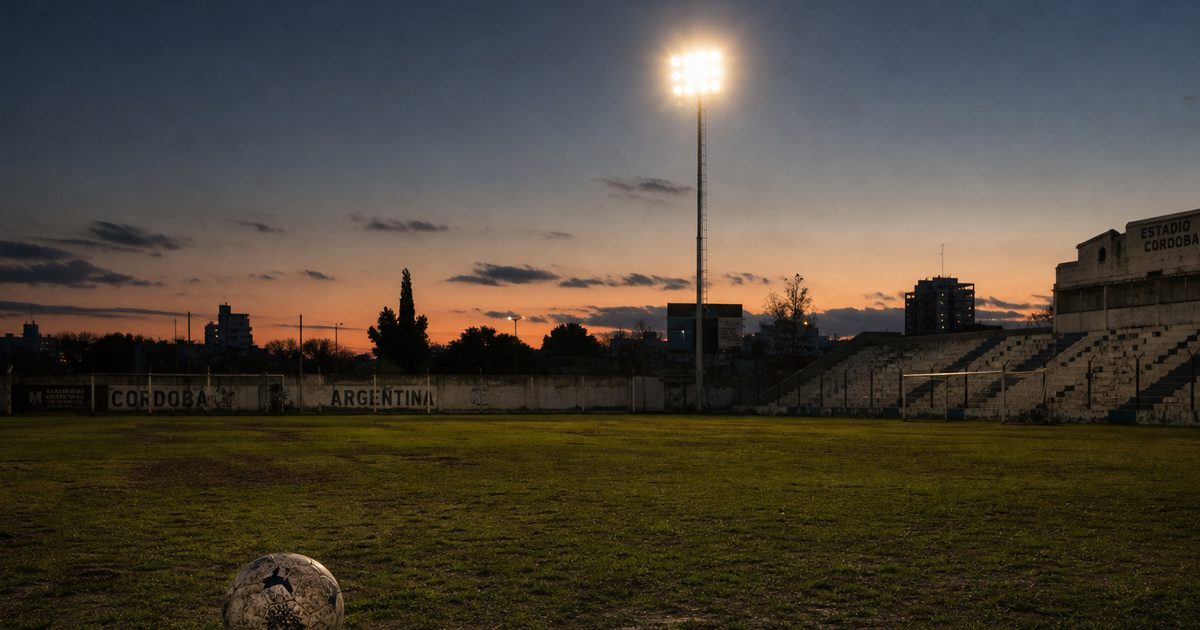
Dybala came through the youth system at Instituto Atlético Central Córdoba and made his senior debut in the 2011-12 season. He did not spend long in the first team, but he left a strong impression. In 38 league appearances in Argentina’s second tier, he scored 17 goals.
The numbers were only part of the story. He played with the kind of balance and deception that would later define him in Italy: a left foot that could finish or slip a pass, quick changes of direction, and a habit of appearing in crowded spaces only to glide out of them. He also set a string of youthfully bold records at the club, including a run of 38 consecutive appearances and scoring streaks that made European scouts take notice.
By mid-2012, Palermo moved quickly. The Sicilian club signed him in July for a fee widely reported at around €8.64 million.
Palermo: learning Serie A, winning Serie B
The move to Italy brought a steep adjustment. Dybala arrived young, slight and talented, and Palermo asked him to adapt fast to a more tactical game. He did not dominate immediately, but his quality was obvious. Across three seasons with the club, he made 93 appearances in all competitions and scored 21 goals. In Serie A alone, he played 89 matches and scored 16 times.
One season mattered more than the rest in shaping his reputation. In 2013-14, Palermo won the Serie B title and returned to the top flight, with Dybala an important attacking piece. In Sicily he was nicknamed “U picciriddu”, “the little boy” in dialect, a nod to his age and slight frame, but also to the sense that Palermo had found a rare talent before the rest of Europe fully caught up.
He was not a fixed-type forward even then. Some games he played off a striker, some from wider areas, some as the central creative link. That flexibility, later so important at Juventus and Roma, was already there.
By the end of the 2014-15 season, Palermo had become too small a stage for him. Juventus stepped in.
Juventus: titles, pressure and the No. 10 shirt
In June 2015, Juventus signed Dybala in a deal reported at €32 million plus add-ons. It was the move that turned promise into status.
His first season in Turin was immediate and convincing. He scored 19 Serie A goals in 2015-16 and helped Juventus win the league and Coppa Italia double. It set the tone for a seven-year spell in which he became one of the most distinctive attackers in Italian football.
From 2015 to 2022, Dybala made 293 appearances for Juventus in all competitions and scored 115 goals. In Serie A, he played 210 matches and scored 82 times. Those figures place him among the club’s notable modern scorers, though not quite as high on the all-time list as is sometimes casually claimed.
The honours were substantial. With Juventus, he won:
- 5 Serie A titles
- 4 Coppa Italia trophies
- 3 Supercoppa Italiana titles
He was also part of the side that reached the 2017 Champions League final, where Juventus lost to Real Madrid.
There were different phases to his Turin years. At times he was the bright, drifting second striker linking midfield to the penalty area. At others he was the main finisher, especially when allowed to start from the right and bend onto his left foot. He could disappear for stretches, then decide a match with one disguised pass or one clean strike from the edge of the box.
The symbolic moment came when he inherited Juventus’ No. 10 shirt. At that club, the number carries history and scrutiny in equal measure. Dybala handled both well enough to become a central figure of an era, even if injuries occasionally interrupted his rhythm.
His best individual league recognition arrived in 2019-20, when he was named Serie A MVP after helping Juventus win another title under Maurizio Sarri.
By the time he left in 2022, there was a sense of a cycle ending. He had delivered trophies, goals and many of the league’s most elegant attacking moments, but the relationship between player and club had reached its natural close.
Roma: a fresh start in a different spotlight
Dybala joined Roma on a free transfer in July 2022. It was one of the most eye-catching deals of that summer in Italy, not because of the fee, but because a player of his pedigree was changing the balance of another major Serie A club.
In Rome, he quickly became a focal point. The shirt number changed back to 21, the role remained fluid, and the crowd embraced him almost immediately. He gave Roma craft between the lines, goals from tight angles and the kind of control in the final third that can change the pace of a game.
Roma reached the Europa League final in 2023, losing to Sevilla on penalties. Dybala scored in that final and was one of the team’s key players during the run. Injuries, again, affected continuity at times, but his influence when fit was rarely in doubt.
His Roma chapter restored him to a central role and extended his long connection with decisive football in Italy. In July 2026, he extended his contract with the club until June 30, 2027, and has recorded 33 goals in 105 appearances.
According to BeSoccer, Saudi club Al-Qadsiah were interested and offered a lucrative package.
Argentina: long competition, one unforgettable penalty
Breaking into Argentina’s senior side was never simple for Dybala. He made his debut on October 13, 2015, against Paraguay, entering a national team era crowded with elite attacking talent.
For years, the discussion around him often centered on fit. Where should he play? Could he share spaces with Lionel Messi? Was he best as a second striker, a No. 10, or a roaming forward? Those questions followed him through tournaments and qualifying campaigns.
He was part of Argentina squads at the 2018 World Cup and the 2019 Copa América, where the team finished third. He also featured in the 2022 Finalissima win over Italy.
Then came the defining moment. At the 2022 FIFA World Cup in Qatar, Dybala was not a constant starter, but he had a crucial role in the final against France. Brought on late in extra time, he converted one of Argentina’s penalties in the shootout. It was a high-pressure kick, struck cleanly, and it helped secure the biggest prize in the sport.
That single moment did not sum up his international career, but it gave it a lasting image: calm, technical, trusted when the stakes were highest.
How Paulo Dybala plays
Dybala has never been a pure winger or a classic center-forward. He is most effective in the spaces around the box, where he can receive on the half-turn, combine quickly and shape the game with his left foot.
At his best, he plays as a second striker or attacking midfielder drifting across the front line. He likes to start slightly to the right, move inward and either shoot across goal or slide passes into runners. His close control is sharp rather than showy. The disguise matters as much as the touch itself.
He has also been a reliable set-piece threat. Free kicks, penalties, curled finishes from the edge of the area, all have been part of his game. Defenders often foul him because he shifts the ball early and changes direction before they are set.
Physically, he has never been built around power or aerial dominance. His game depends more on timing, balance and reading the next action a fraction sooner than everyone else.
Off the pitch: heritage, nicknames and a very public relationship
“La Joya” remains the nickname most associated with Dybala. It translates as “The Jewel,” and while the exact origin is sometimes told in slightly different ways, it has long been attached to him in Argentina and Italy. At Palermo, as noted, he was also known as “U picciriddu.”
His family background is a regular part of his public profile, especially when discussions turn to nationality and heritage. The broad outline is well established: Polish roots through his grandfather, Italian ancestry through his mother’s side, and an Argentine identity he has consistently embraced.
Away from football, his relationship with Argentine singer and actress Oriana Sabatini has been unusually visible for a top-level player. The couple announced their engagement in 2023 and married on July 20, 2024. Any later family developments should be treated carefully unless confirmed directly by the couple or by reliable public reporting.
Commercially, Dybala has worked with Adidas and has regularly featured in the brand’s football campaigns. Reports about his exact Roma salary have circulated in the Italian media, but wage figures are typically based on club-reporting estimates rather than formal public disclosure, so they are best described as reported rather than definitive.
One last detail belongs to the image of the player himself: the “mask” celebration. Dybala has explained it as a gladiator-style gesture, a theatrical but controlled symbol that fits his game rather well, expressive, precise, and never especially loud.
FAQ
How old is Paulo Dybala?
He was born on November 15, 1993.
Which clubs has Paulo Dybala played for?
He has played for Instituto, Palermo, Juventus and Roma.
Has Paulo Dybala won the World Cup?
Yes. He was part of Argentina’s 2022 World Cup-winning squad and scored in the final shootout against France.
What position does Paulo Dybala play?
He has played as a forward, second striker, attacking midfielder and, at times, from wide areas.
Why is Paulo Dybala called La Joya?
“La Joya” means “The Jewel,” a nickname long associated with his talent and style.
Is Paulo Dybala married?
Yes. He married Oriana Sabatini in July 2024.