At 17 years and 75 days, Theo Walcott walked onto the pitch for England before he had played a minute in the Premier League. His introduction against Hungary in May 2006 made him the country’s youngest senior international and accelerated a career that was already moving faster than most.
The speed became his signature, but it was never the whole story. Across twelve years at Arsenal, he scored 108 goals in 397 appearances, won three FA Cups and learned to turn raw acceleration into a more measured attacking threat. Everton followed, then a return to Southampton, where his professional career had begun.
From Berkshire pitches to Southampton’s first team
Born on March 16, 1989, in Stanmore, Theo James Walcott grew up in Compton, Berkshire. He played youth football for Newbury and briefly joined Swindon Town before entering Southampton’s academy in 2000.
His progress was rapid. At 15 years and 175 days, he became Southampton’s youngest reserve-team player. By the following summer, he was pressing for a place in the senior side.
On August 6, 2005, he came off the bench against Wolverhampton Wanderers in the Championship. Aged 16 years and 143 days, he became the youngest first-team player in Southampton’s history at the time.
There was substance behind the excitement. His pace troubled experienced defenders, and he scored on his first league start, against Leeds United in October. Southampton had a teenager capable of changing the mood of a match with one run; bigger clubs soon took notice.
He made only 23 senior appearances during that first spell, scoring five goals in all competitions. It was enough to persuade Arsène Wenger that he belonged at Arsenal.
Arsenal and England arrive almost together
Arsenal signed Walcott in January 2006 for an initial £5 million, with further payments built into the agreement. He was still 16 and had barely half a season of senior football behind him.
Wenger initially kept him out of the first team. England manager Sven-Göran Eriksson took a different approach, selecting him for the 2006 World Cup squad despite his lack of Premier League experience.
His senior international debut came against Hungary on May 30, when he replaced Michael Owen in a 3-1 friendly victory. The appearance broke Wayne Rooney’s record as England’s youngest player.
The World Cup itself was a different experience. Walcott travelled to Germany but did not play. He had become a national talking point before making his Arsenal debut, carrying expectations that owed more to his potential than to an established body of work.
His first competitive appearance for Arsenal finally came against Aston Villa in August 2006. Coming off the bench in the club’s first Premier League match at the Emirates Stadium, he helped create Gilberto Silva’s equaliser.
That December, he won the BBC Young Sports Personality of the Year award. Within sixteen months, he had gone from a Championship debut to international recognition.
Finding his feet, then his finishing touch
The early Arsenal years were uneven. Walcott could leave defenders behind, but choosing the right pass or finishing under pressure required experience that acceleration alone could not supply.
His first Arsenal goal came in the 2007 League Cup final against Chelsea. He opened the scoring, although Arsenal lost 2-1. It was an early glimpse of the diagonal runs and composed finishes that would become increasingly important to his game.
A clearer breakthrough arrived with England in September 2008. Away to Croatia in a World Cup qualifier, he scored a hat-trick in a 4-1 victory, becoming the youngest player to score three goals in a senior England match.
Yet his international career rarely followed a straight line. Fabio Capello left him out of the 2010 World Cup squad. At Euro 2012, he came off the bench against Sweden, scored the equaliser and helped create Danny Welbeck’s winner in a 3-2 victory.
At Arsenal, the 2012-13 season brought his strongest scoring return: 21 goals in all competitions, making him the club’s leading scorer. His five League Cup goals also left him top scorer in that competition.
He increasingly wanted opportunities through the middle rather than being confined to the right wing. The argument was understandable. His best work often involved running beyond a defence and finishing quickly, rather than receiving the ball wide against an opponent already set to stop him.
Injury, Wembley and an Arsenal century
A serious knee injury interrupted that progress in January 2014. Walcott ruptured the anterior cruciate ligament in his left knee during an FA Cup tie against Tottenham, ruling him out of the rest of the season and the World Cup in Brazil.
Arsenal went on to win the FA Cup, but he watched the final rather than playing in it.
A year later, he had a much more direct role. Selected at centre-forward against Aston Villa in the 2015 final, he scored the opening goal in a 4-0 win. After the long rehabilitation, it was a particularly satisfying afternoon.
A third FA Cup winners’ medal followed in 2017. He also won the Community Shield with Arsenal in 2015 and 2017.
In February 2017, he reached 100 goals for the club with a finish against Sutton United in the FA Cup. By his departure, the total stood at 108 across 397 appearances.
Those numbers gave a fuller picture than the familiar description of him as merely quick. His availability and form fluctuated, but he repeatedly found goals from wide positions and made well-timed runs into central scoring areas.
Everton offers a fresh start
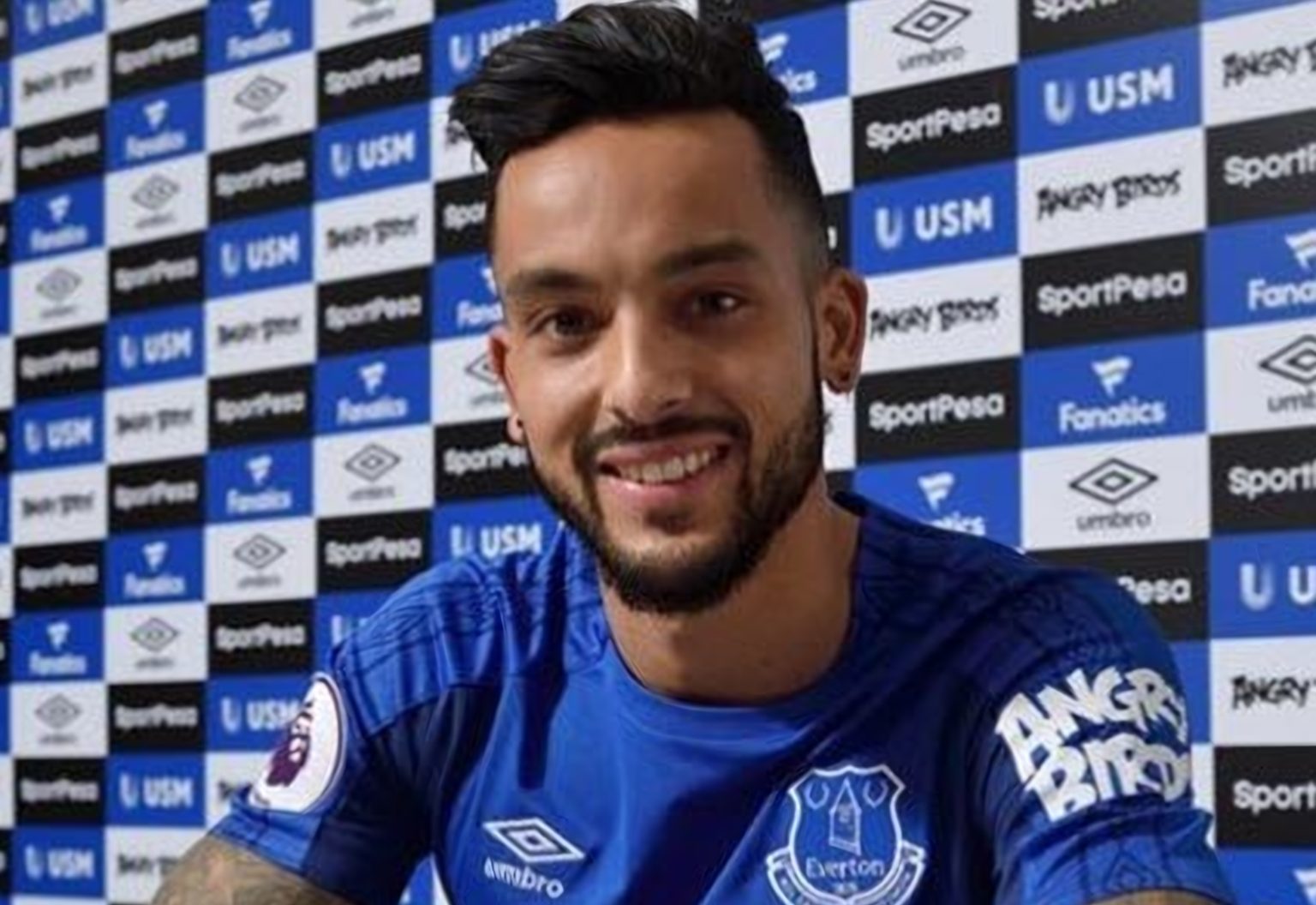
In January 2018, Walcott joined Everton for a reported £20 million. After twelve years in north London, he wanted more regular football.
He made an immediate impression, scoring twice against Leicester City in his second appearance. His direct running offered Everton a way to get forward quickly, particularly when there was space behind the opposition.
The move did not produce the sustained revival he might have hoped for. Changes in management and competition for places made it difficult to establish lasting momentum.
He finished his Everton career with 11 goals in 85 appearances in all competitions. In October 2020, he returned to Southampton on loan.
Back where it began
The return brought Walcott back to familiar surroundings with a very different perspective. He had left Southampton as a teenage prospect; he came back with extensive Premier League experience and 47 England caps.
He scored against Wolves in November 2020 and against Arsenal the following month. His movement still offered a threat, even if injuries and selection limited his involvement.
The loan became a permanent move in the summer of 2021. Southampton’s relegation in 2023 made for a difficult final season, though his early goal in a 3-3 draw at Arsenal provided one last notable moment at his former home.
He left when his contract expired that summer and announced his retirement on August 18, 2023. His England career had ended with 47 appearances and eight goals, the last cap coming in 2016. Despite his teenage selection, he never played at a World Cup.
Family, books and life beyond the touchline
Away from football, Walcott has shared parts of his family life publicly while keeping much of it private. He married his long-term partner, Melanie Slade, in 2013. They have two sons, Arlo and Finley.
Writing became another outlet during his playing career. His children’s books, the TJ series, followed a young footballer navigating matches, friendships and school life. His autobiography, Growing Up Fast, published in 2011, had an apt title for someone whose England debut preceded his first top-flight appearance.
Commercially, he moved from Nike to Adidas in 2015. Published salary and net-worth estimates are not audited accounts of his wealth, so precise claims about his fortune should be treated cautiously.
After retirement, he moved into television analysis, including work with Sky Sports, and took on an ambassadorial role with Arsenal. The setting changed, but the connection to the game remained: discussing the runs, decisions and finishing chances that had occupied him for nearly two decades.
FAQ
How old was Theo Walcott when he made his England debut?
He was 17 years and 75 days old when he played against Hungary on May 30, 2006, becoming England’s youngest senior international.
Which clubs did he play for?
He played senior football for Southampton, Arsenal and Everton, returning to Southampton first on loan and then permanently.
How many goals did he score for Arsenal?
He scored 108 goals in 397 competitive appearances between 2006 and 2018.
What was his England record?
He earned 47 senior caps and scored eight goals, including a hat-trick against Croatia in September 2008.
Did he play at a World Cup?
No. He was selected for the 2006 tournament but did not appear. He missed selection in 2010 and was injured for the 2014 tournament.
When did he retire?
He announced his retirement on August 18, 2023, after leaving Southampton that summer.
Photo: Armanamirahmadi, CC BY-SA 4.0, via Wikimedia Commons